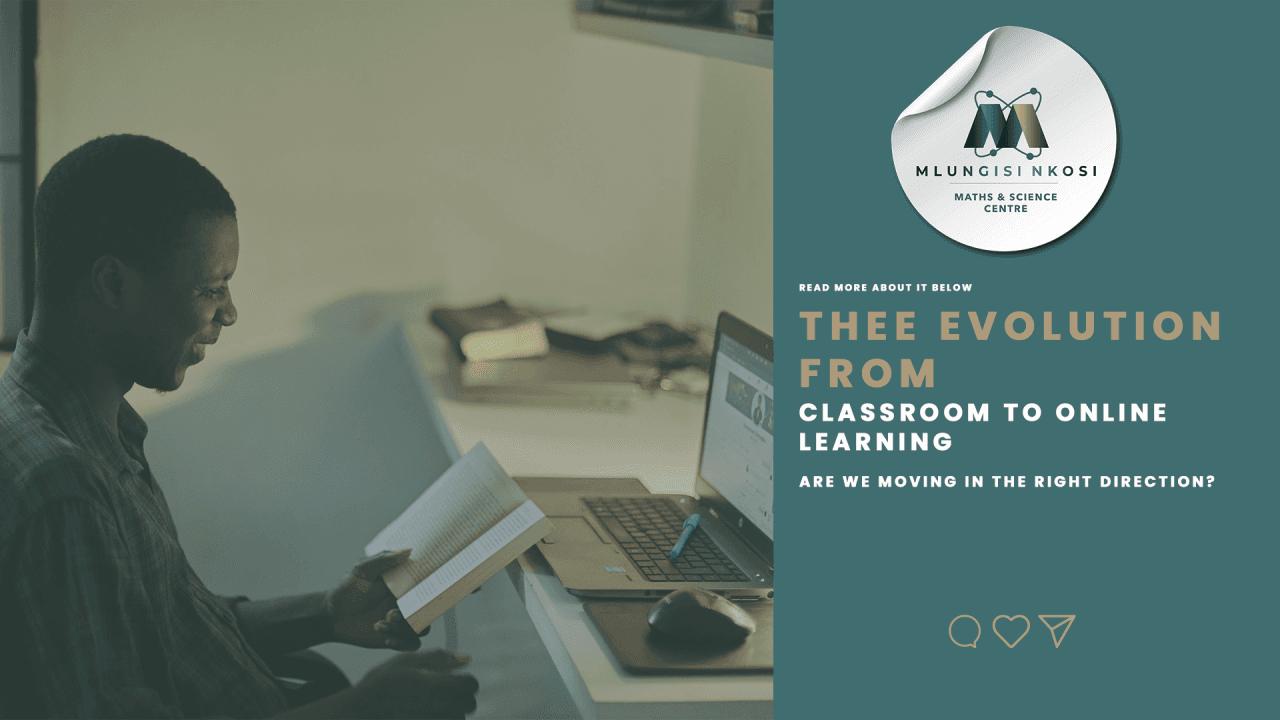
In the wake of the COVID-19 pandemic, our educational paradigm shifted dramatically, thrusting both educators and students into a realm of virtual learning. It was a hard time not only for me but for everyone around the world, fraught with challenges and uncertainties, yet it also sparked a profound transformation in the way we approach education.
For me, the journey into online teaching began as a response to an urgent need. With schools shuttered and traditional learning avenues inaccessible, I turned to digital platforms as a lifeline for my students. What started as a humble YouTube channel soon became a beacon of hope for countless learners, offering a semblance of normalcy in an otherwise chaotic world.
Statistics South Africa reports a staggering surge in the adoption of online learning during the pandemic, with a notable increase in the number of learners turning to YouTube videos as their virtual tutors. It's a testament to the resilience of our education system, but it also raises very important questions about the future of learning.
As we reflect on this evolution, one cannot help but wonder: What does the widespread reliance on digital resources mean for the future of education? How do we ensure that all students have equitable access to quality learning experiences, regardless of their circumstances? Are we moving in the right direction?
While the shift to online learning has undoubtedly democratised education in many ways, it has also exposed the many inequalities that exist within our society. The digital divide, amplified by issues of connectivity and access, threatens to widen existing inequalities and marginalize those already on the fringes.
Yet amidst these challenges lies a glimmer of hope – an opportunity to reimagine the possibilities of education and embrace a more inclusive and equitable future. By harnessing the power of technology and leveraging digital resources effectively, we can create a learning environment that is truly accessible to all.
As an educator deeply committed to the cause of education, I can't express how extremely important it is to me that we bridge the gap and make learning accessible to all. Every student deserves the opportunity to thrive, regardless of their background or circumstances. By embracing online learning and leveraging digital tools, we can reach students in remote areas, those with physical limitations, and others who may face barriers to traditional education. It is my firm belief that inclusive education is not just a goal but a moral imperative, and I am dedicated to ensuring that every learner has the chance to succeed.
As we chart a course forward, let us not lose sight of the lessons learned during this unprecedented time. Let us challenge ourselves to think beyond the confines of traditional education and embrace the potential of online learning to transform lives and communities.
In closing, let us remember that the greatest lessons are often learned outside the confines of the classroom. Let's continue to explore, innovate, and inspire – for the benefit of all learners, today and tomorrow.
